








The EDMISTON
BUSINESS INTELLIGENCE
Global SUPERYACHT market INSIGHTS, DATA and industry REPORTS.
Market leadership depends on clarity. At Edmiston, business intelligence is a core discipline that informs how we read, interpret and influence the superyacht market. Drawing on proprietary data, live deal flow and decades of experience across sales and charter, we build a continuous view of market dynamics as they evolve. This allows us to operate with precision in a sector where visibility is often limited.
Our publications extend this perspective to our clients. They provide measured commentary across luxury yacht sales, charter and emerging trends, grounded in real activity rather than assumption. The objective is not to add noise, but to bring clarity and transparency to a complex market. In doing so, we ensure our audience remains informed, well positioned and able to act with confidence.
The EDMISTON INTELLIGENCE.
Edmiston Intelligence is our triannual view of the superyacht market. It combines sales and charter analysis with industry developments, innovation and destinations, offering clarity and perspective in a market where visibility is often limited.
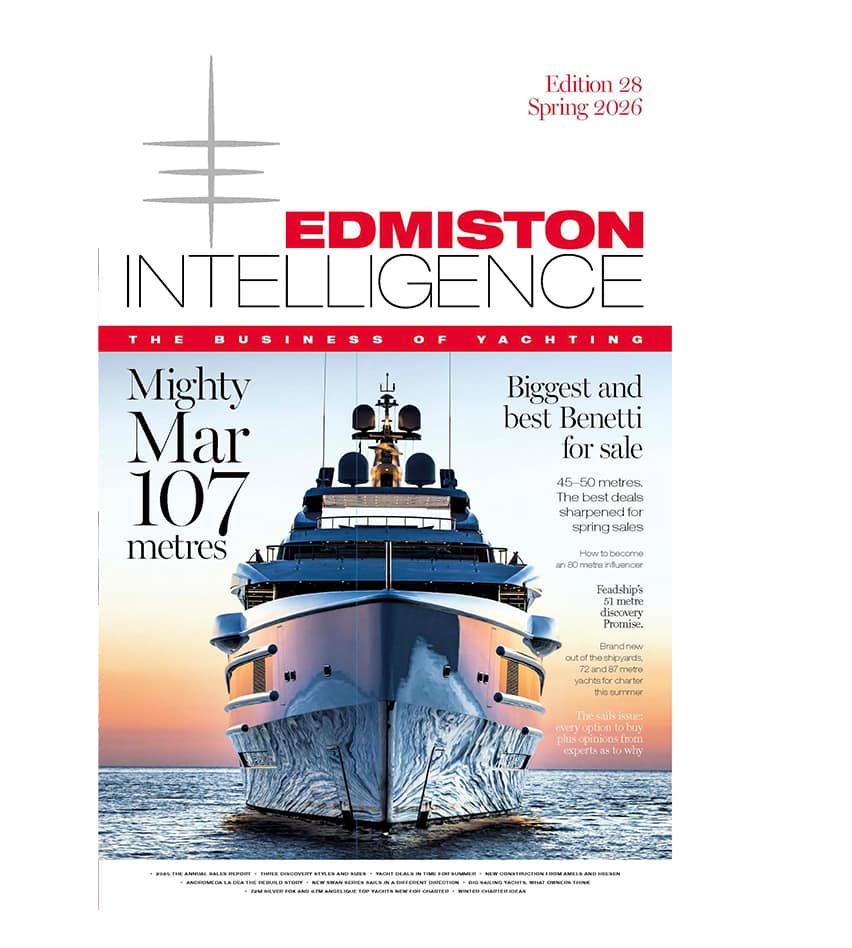
Edition 28 – Spring 2026
Featuring MAR, record sales and rising demand for 80m+ yachts define current conditions, with global expansion, innovation and access to the best yachts shaping the next phase of luxury yachting.
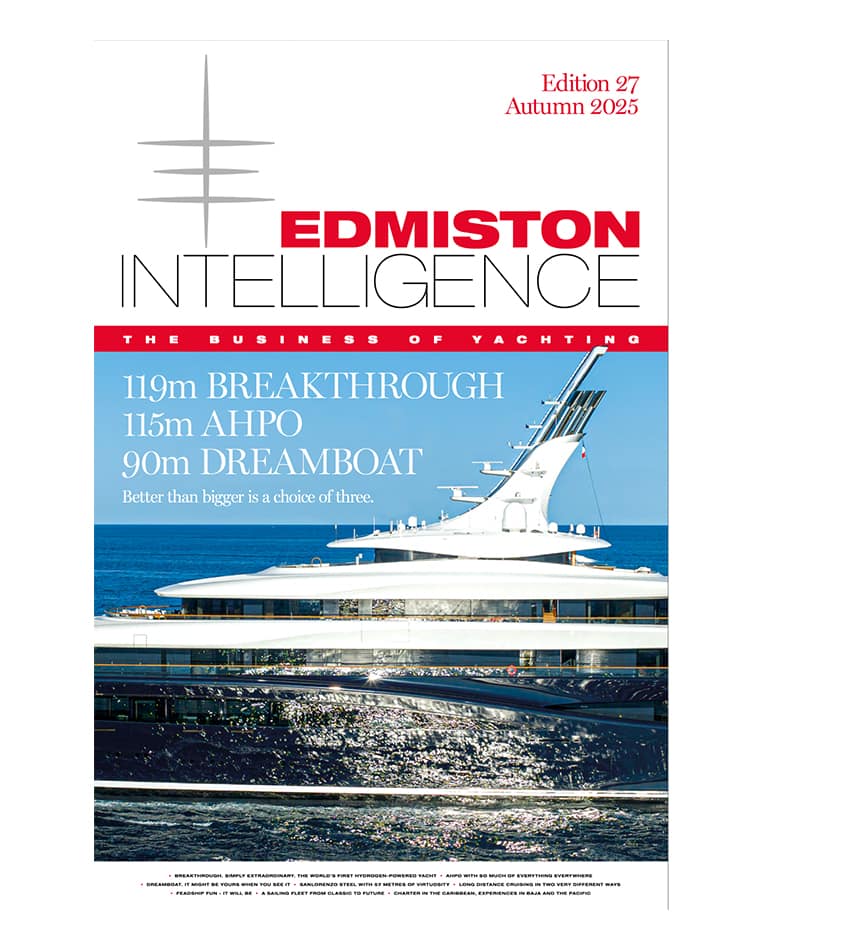
Edition 27 – Autumn 2025
Breakthrough sets a new benchmark in the superyacht market, combining hydrogen innovation with strong 100m+ demand, ongoing volatility, and a decisive move toward next-generation ownership.
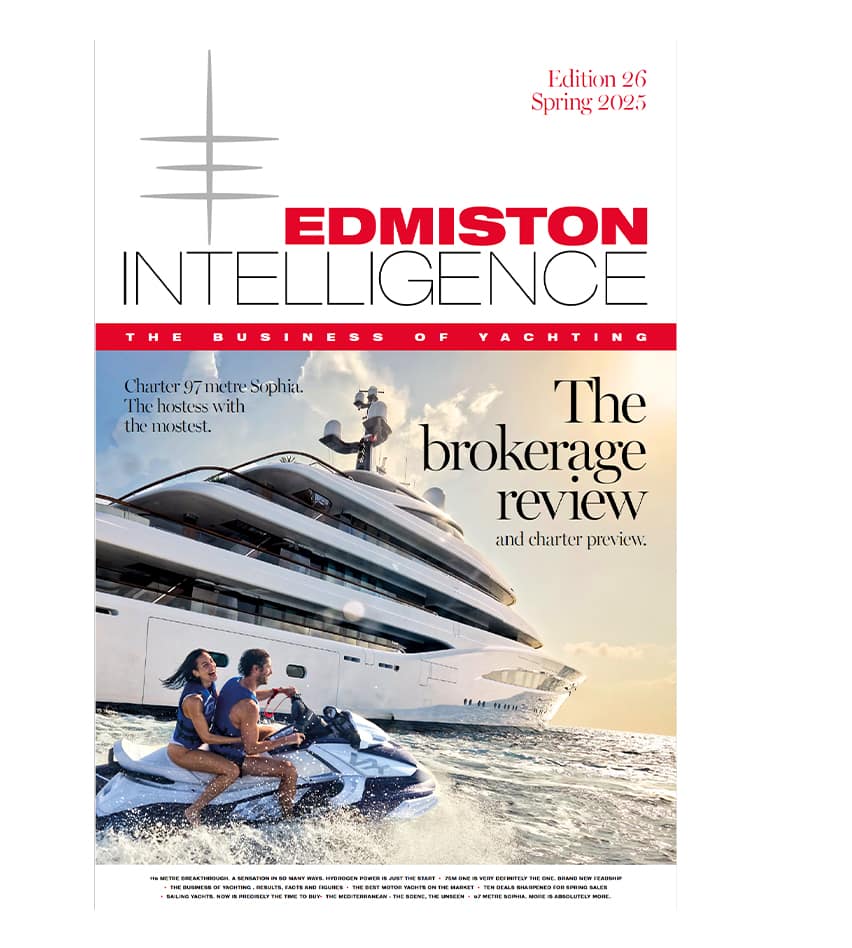
Edition 26 – Spring 2025
A €5.7bn market highlights the strength of the superyacht sector, with concentrated high-value sales and continued demand for 80m+ yachts shaping the top end.

Edition 25 – Autumn 2024
The superyacht market strengthens as demand continues for large yachts such as H3, with evolving brokerage dynamics, innovation, and access to the best cruising destinations driving decisions.

Edition 24 – Spring 2024
Fewer but higher-value deals define the superyacht market, with strong demand for 60m+ yachts, increased price realism, and a clear shift toward experience-led ownership.
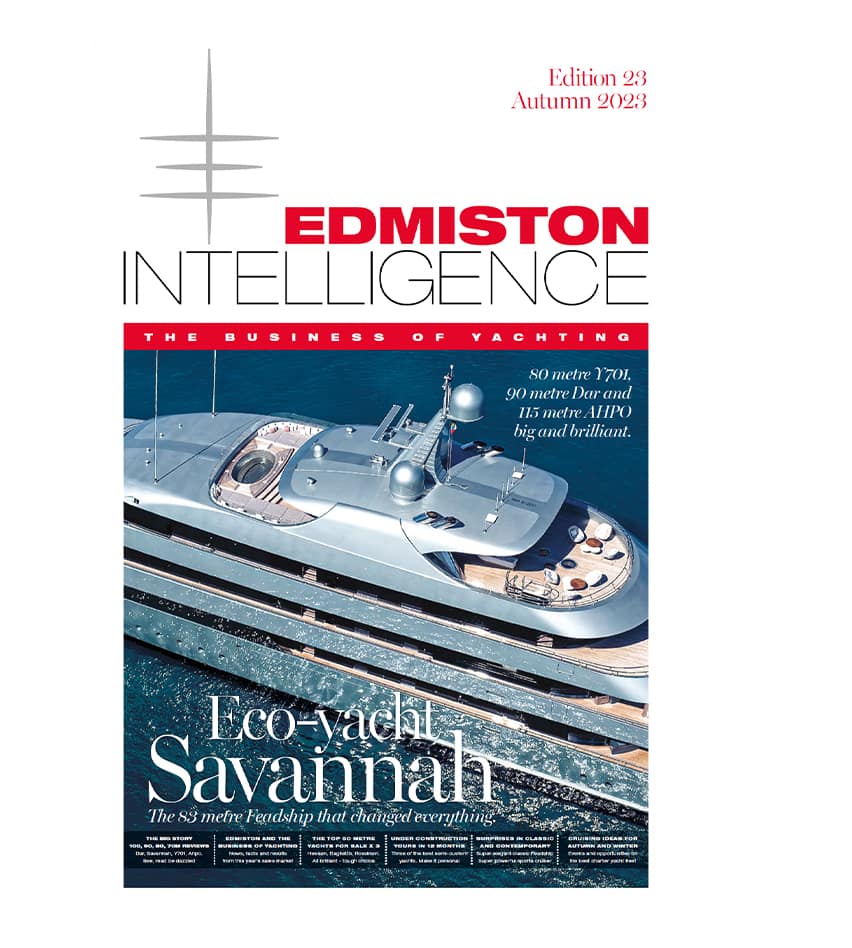
Edition 23 – Autumn 2023
Buyer focus sharpens across the superyacht market, prioritising value, pedigree shipyards, and larger yachts, with continued growth in experience-led cruising and global charter demand.
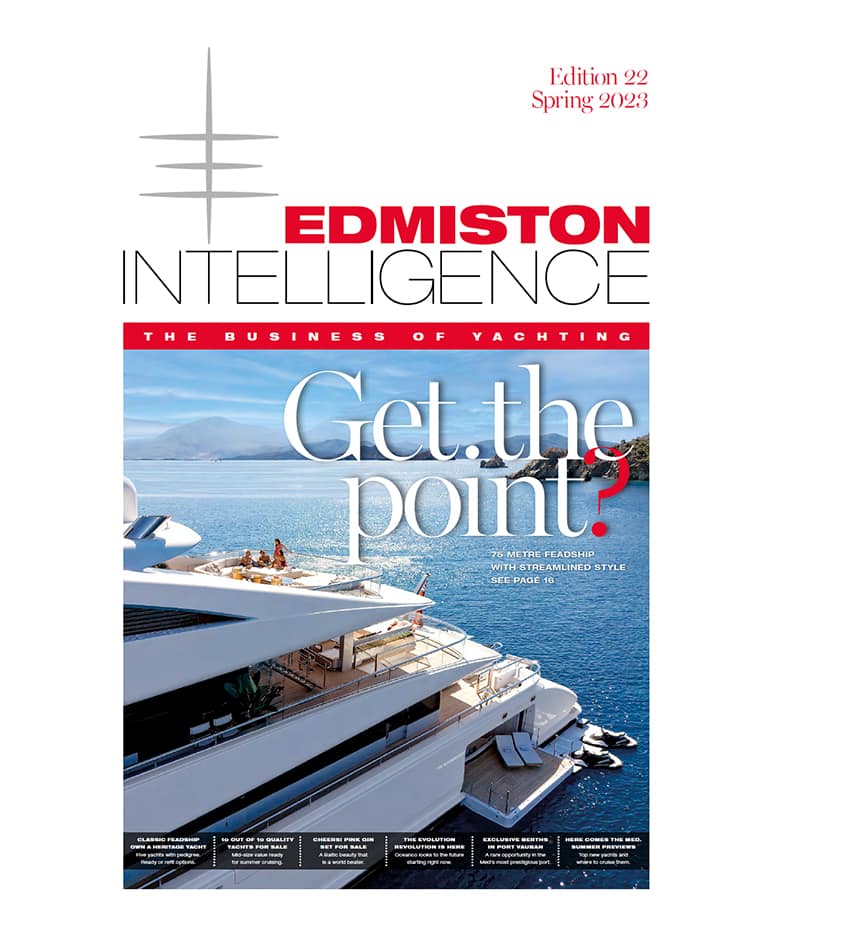
Edition 22 – Spring 2023
Recalibration shapes the superyacht market, with increased supply and pricing adjustments, while demand concentrates on larger, better yachts and more meaningful ownership experiences.
Edition 21 – Summer 2022
The superyacht market resets post-boom with limited supply and firm pricing, as demand remains strong for large yachts and global charter continues to expand.
Edition 20 – Spring 2022
The superyacht market stabilises at high levels, with constrained supply, sustained values, and continued demand for large yachts, premium charter, and flexible global cruising.
Edition 19 – Summer 2021
Limited supply and rising prices define the superyacht market, with continued demand for 50m+ yachts and a clear advantage for those able to access the best opportunities early.
Edition 18 – Spring 2021
A post-pandemic surge transforms the superyacht market, delivering record sales, reduced availability, and intense demand for large yachts as private travel becomes a priority.

Edition 17 – Winter 2020
The superyacht market accelerates through pandemic-driven demand, with ownership and charter rising sharply as clients prioritise privacy, security, and access to remote cruising destinations.
Edition 16 – Summer 2020
Uncertainty enters the superyacht market, yet demand for private yachts remains resilient, as ownership becomes more compelling and cruising patterns shift toward privacy and flexibility.
Edition 15 – Winter 2019
Record-breaking sales and new build momentum place the superyacht market at full strength, with increasing demand for bespoke yachts and world-class charter experiences.
Edition 14 – Summer 2019
Sustained activity defines the superyacht market, with continued demand for premium yachts, refined design, and exclusive cruising across established and emerging global destinations.
Edition 13 – Spring 2019
At its peak, the superyacht market delivers record sales and charter demand, driven by large yacht transactions, design innovation, and access to the world’s most desirable cruising destinations.
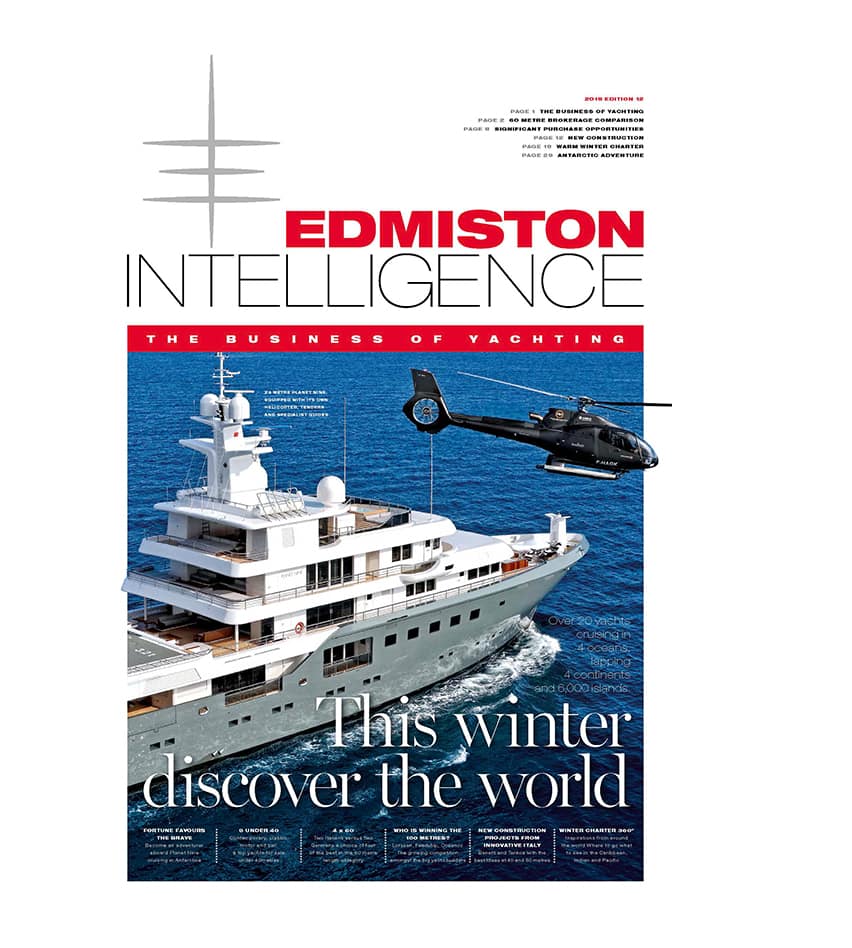
Edition 12 – Winter 2018
Values rise across the superyacht market as demand strengthens for performance-led yachts, premium charter, and 60m+ vessels, reinforcing the importance of expert brokerage and market intelligence.

Edition 11 – Summer 2018
Strong sales and rising demand for larger yachts power the superyacht market, supported by global charter growth, design innovation, and increasing focus on high-quality cruising experiences.
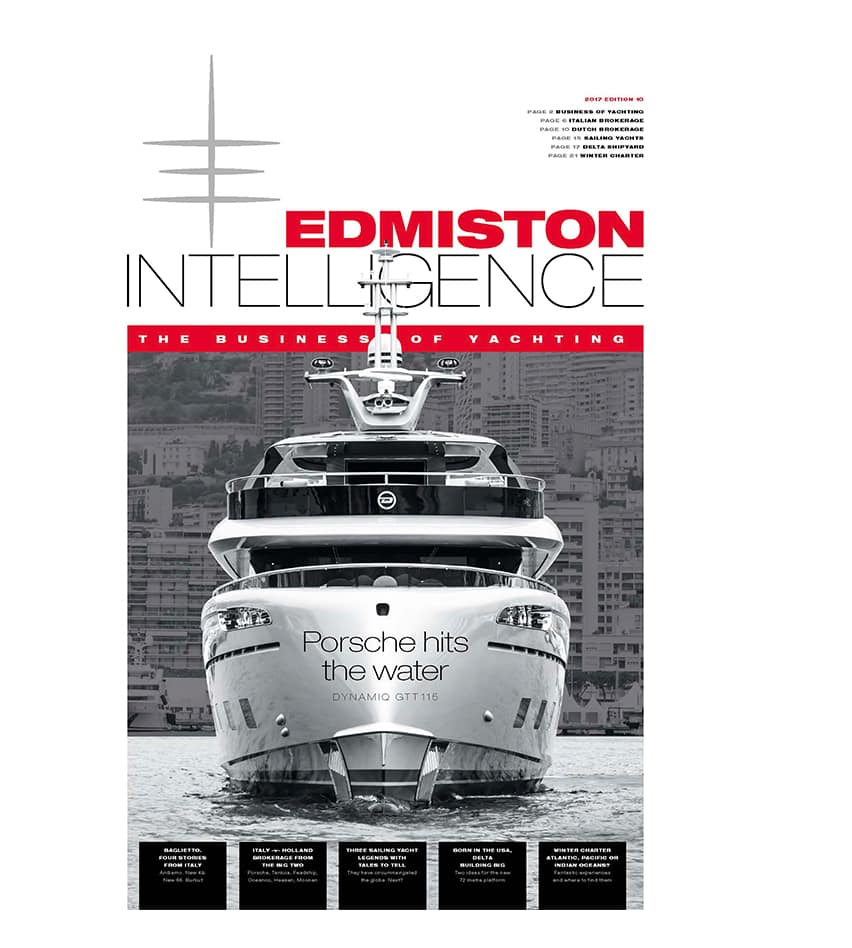
Edition 10 – Winter 2017
Demand for 70m+ yachts drives the superyacht market forward, with emphasis on advanced design, premium charter, and securing access to the best yachts through experienced brokerage.

Edition 9 – Summer 2017
Growth continues across the superyacht market with strong sales activity, design evolution, and expanding cruising regions, reinforcing demand for well-priced, high-quality yachts in prime locations.
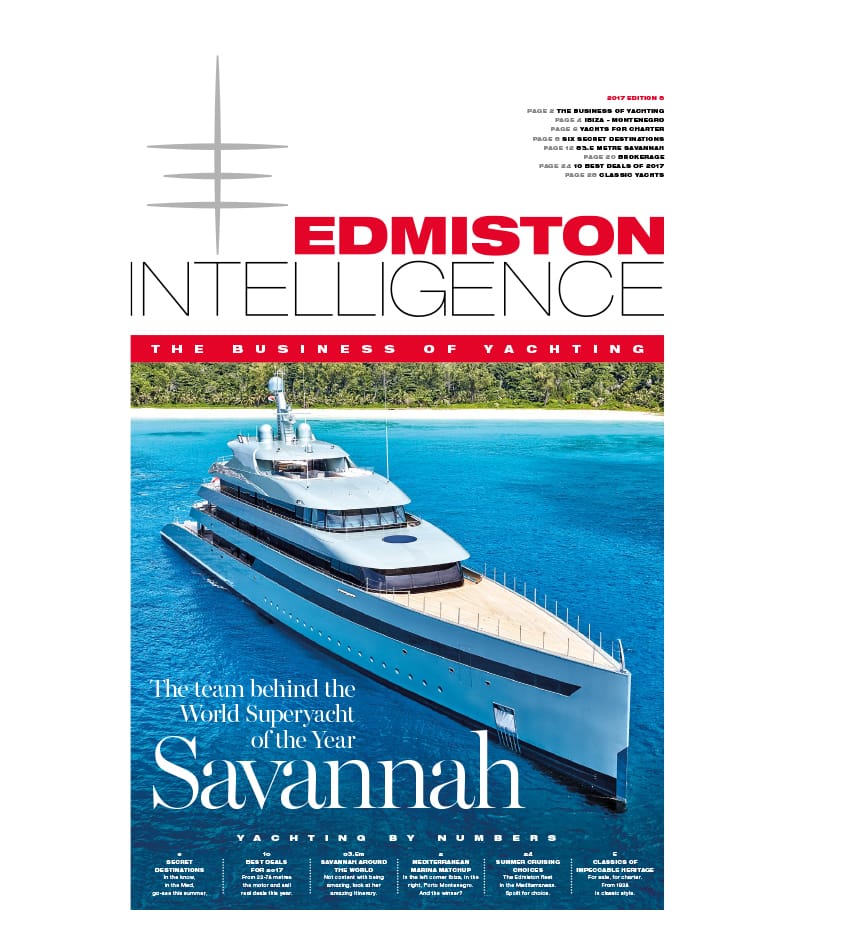
Edition 8 – Spring 2017
The superyacht market matures with greater focus on build quality, long-term value, and lifestyle, as brokerage expertise becomes central to navigating increasingly competitive global opportunities.
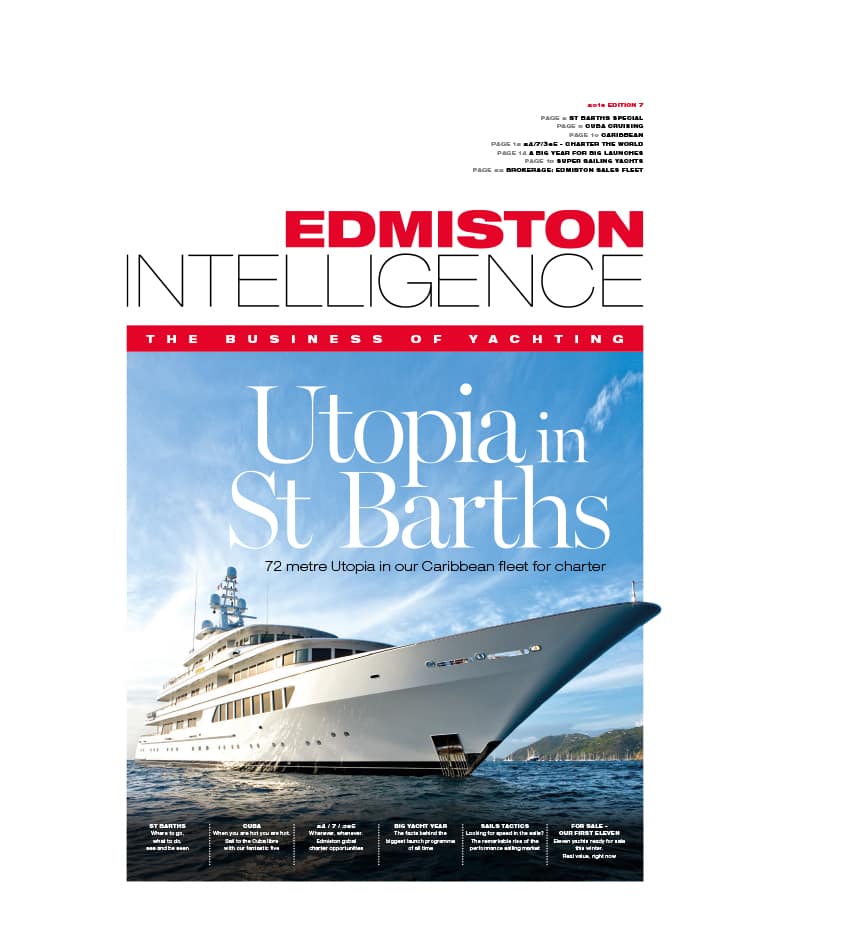
Edition 7 – Winter 2016
Ownership expectations rise across the superyacht sector, driven by design innovation, high-value transactions, and more refined charter experiences, with clients seeking better yachts, not just bigger ones.
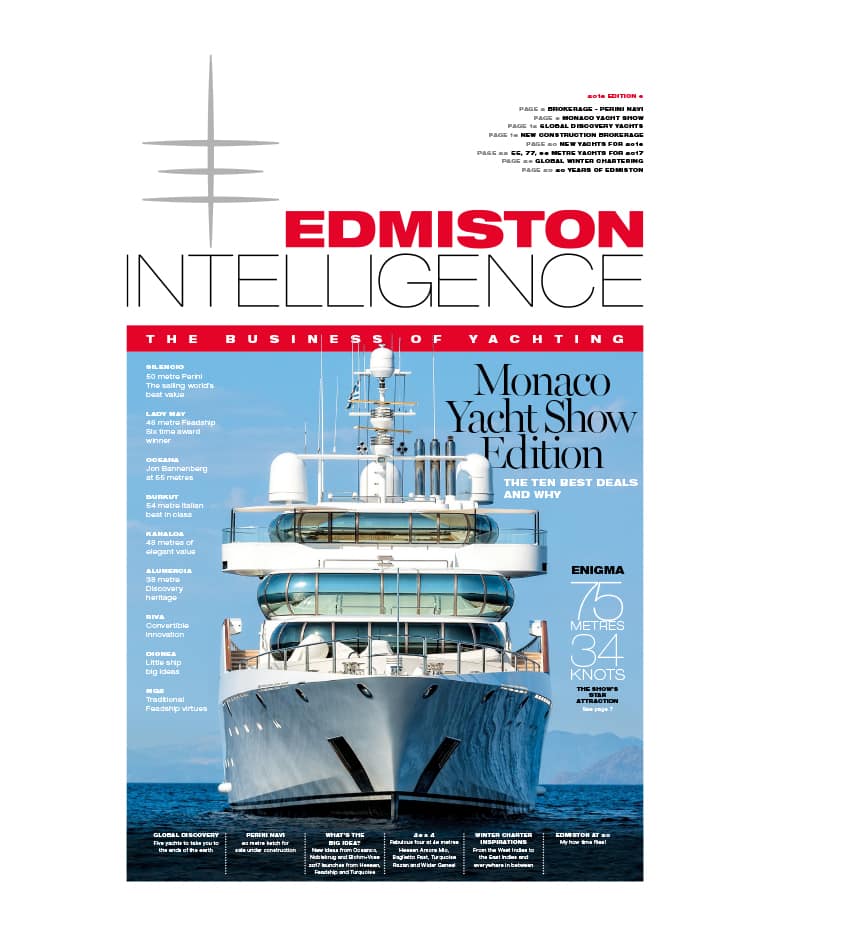
Edition 6 – Autumn 2016
Demand strengthens across the superyacht market as larger yachts gain traction, supported by active charter markets, evolving design, and wider cruising opportunities across the Mediterranean and Caribbean.
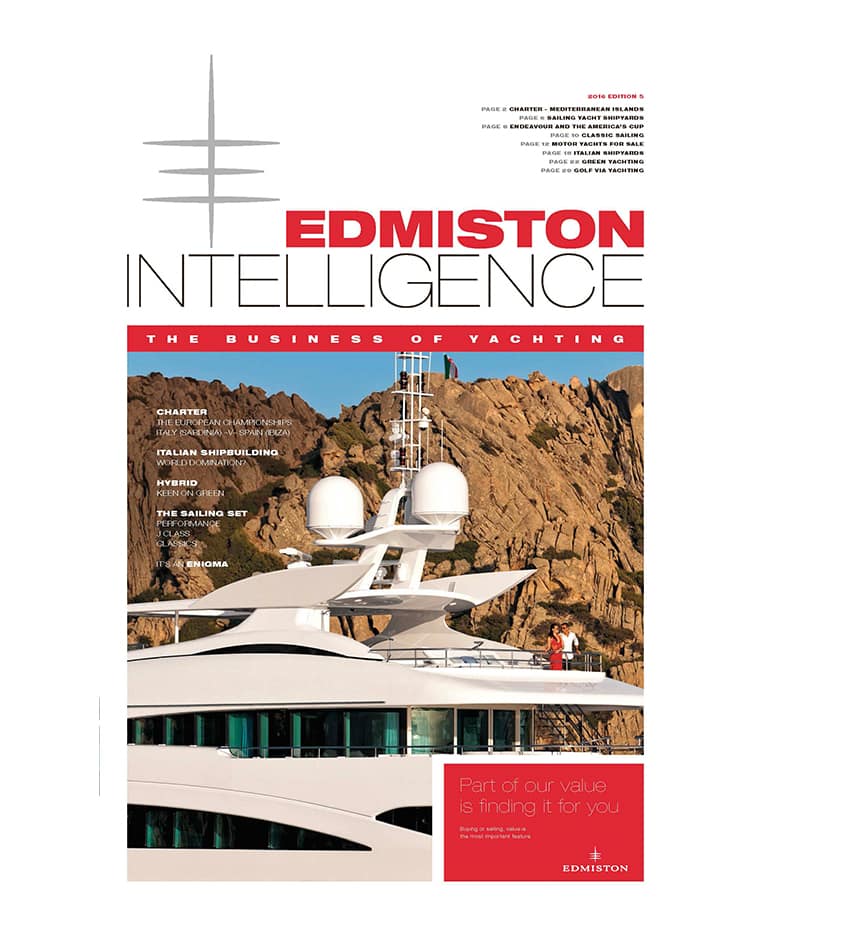
Edition 5 – Summer 2016
The superyacht market shifts upward with increasing demand for 60m+ yachts, combining design innovation, premium destinations, and brokerage expertise to deliver more sophisticated ownership experiences.
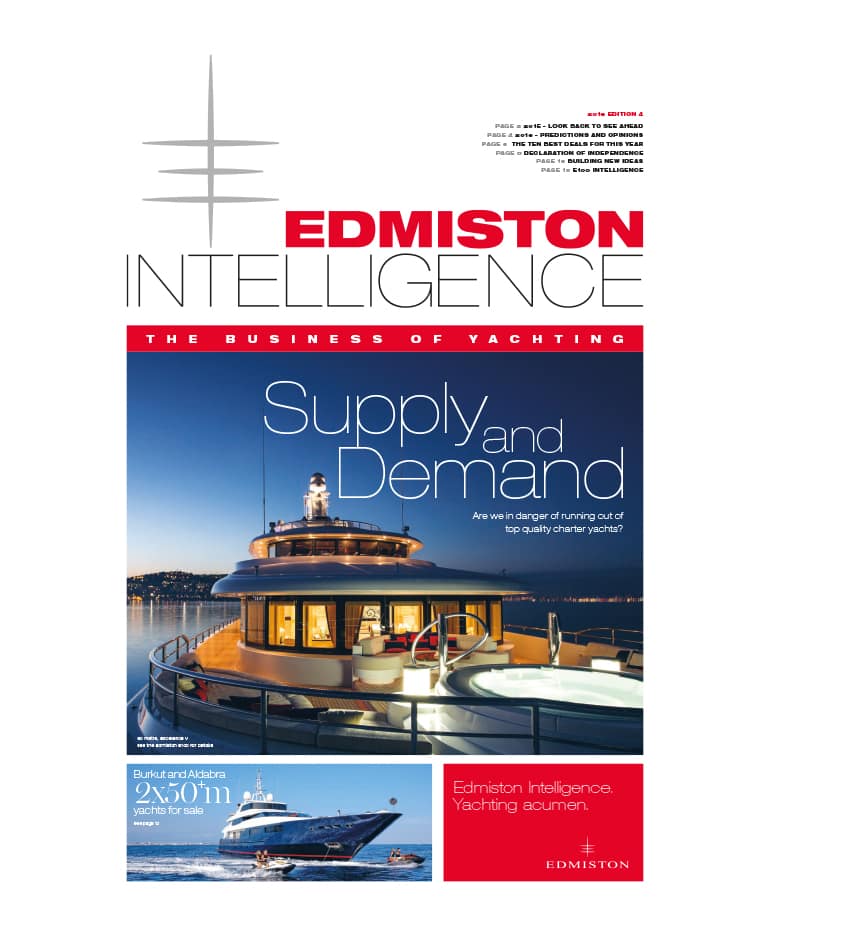
Edition 4 – Spring 2016
An expanding fleet and stronger charter demand accelerate the superyacht market, with increased large yacht transactions, new build innovation, and growing appetite for bespoke ownership.

Edition 3 – Winter 2015
Demand moves up in size across the superyacht market, driving brokerage activity, shaping design direction, and reinforcing the appeal of larger yachts, prime destinations, and smarter acquisition decisions.
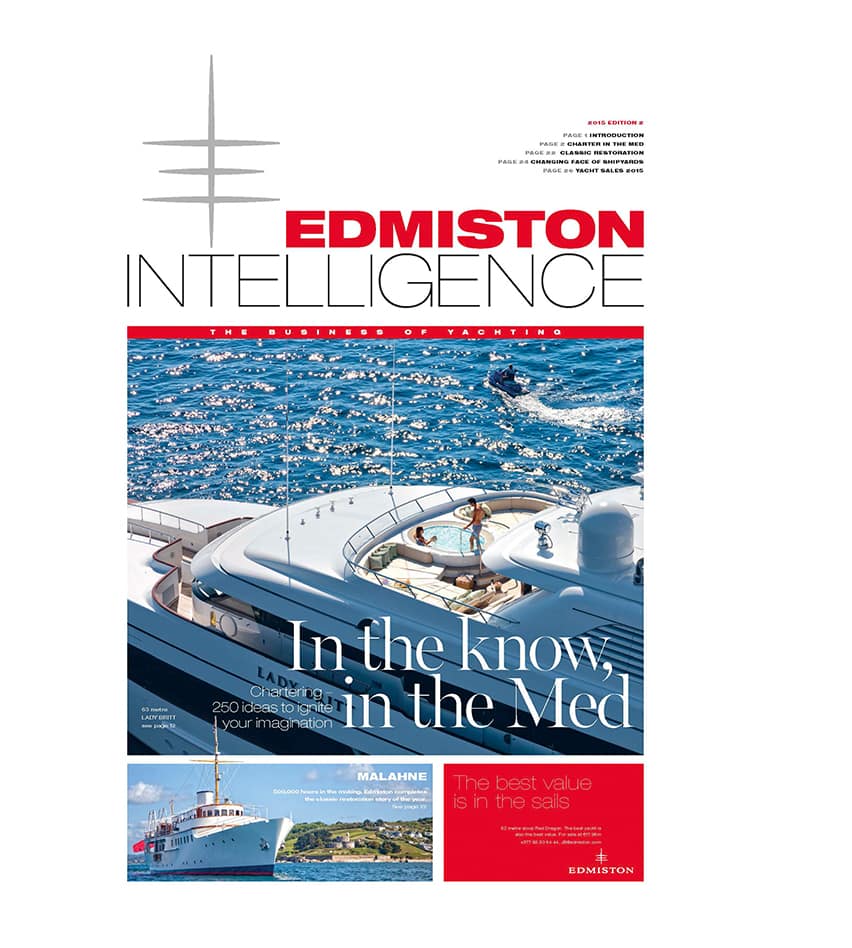
Edition 2 – Summer 2015
Momentum builds across the superyacht market with rising sales and charter demand, highlighting Mediterranean hotspots, 50m+ yachts, and the growing importance of expert brokerage in securing the best opportunities.
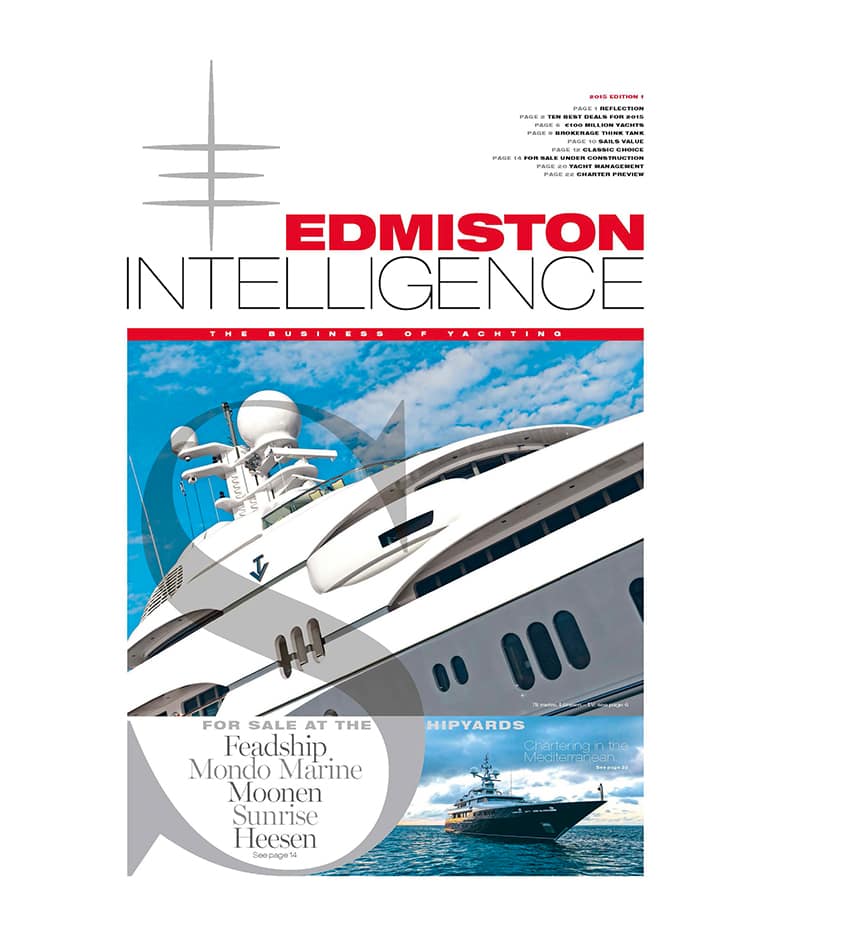
Edition 1 – Spring 2015
The superyacht market comes into focus with global brokerage insight, standout yachts, and Mediterranean charter demand, revealing early momentum in large yacht ownership and the shift toward experience-led luxury.
The EDMISTON PORTFOLIO.
The Edmiston Portfolio is our annual charter publication, combining a curated fleet with global destinations. It reflects how we approach luxury superyacht charter: considered selection, informed perspective and access to the right yachts, in the right places.
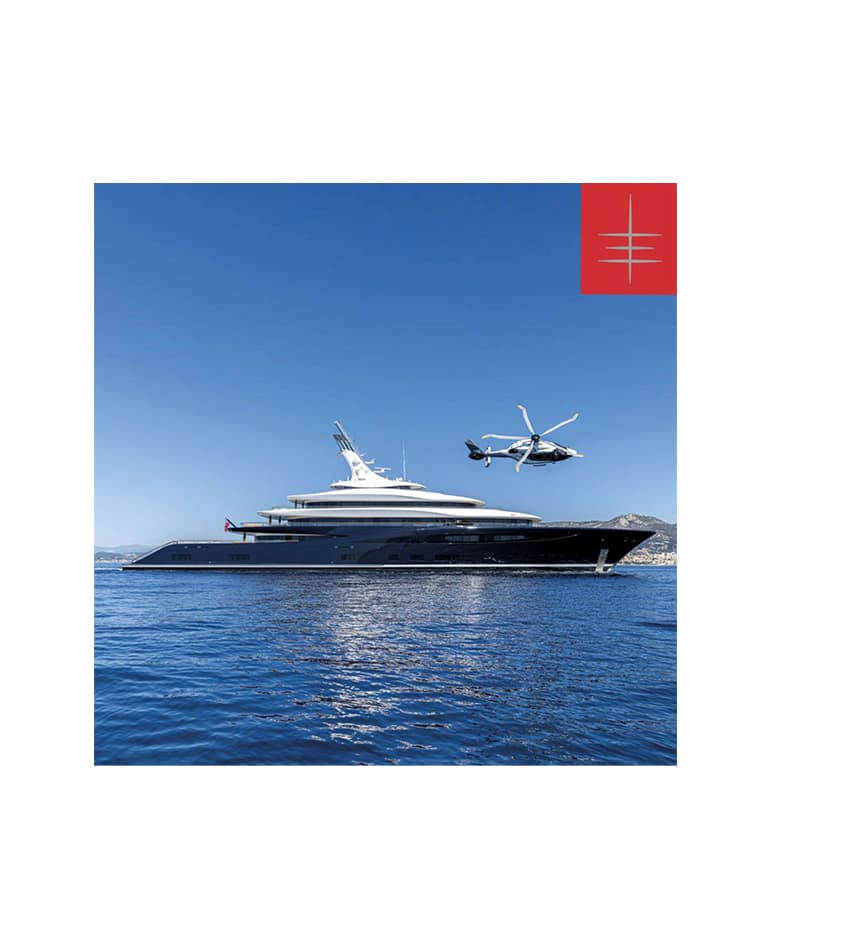
2026
Featuring Breakthrough yacht, the portfolio reflects global expansion, advanced yacht technology and immersive onboard experiences, with larger yachts and wider cruising regions redefining modern luxury yachting.
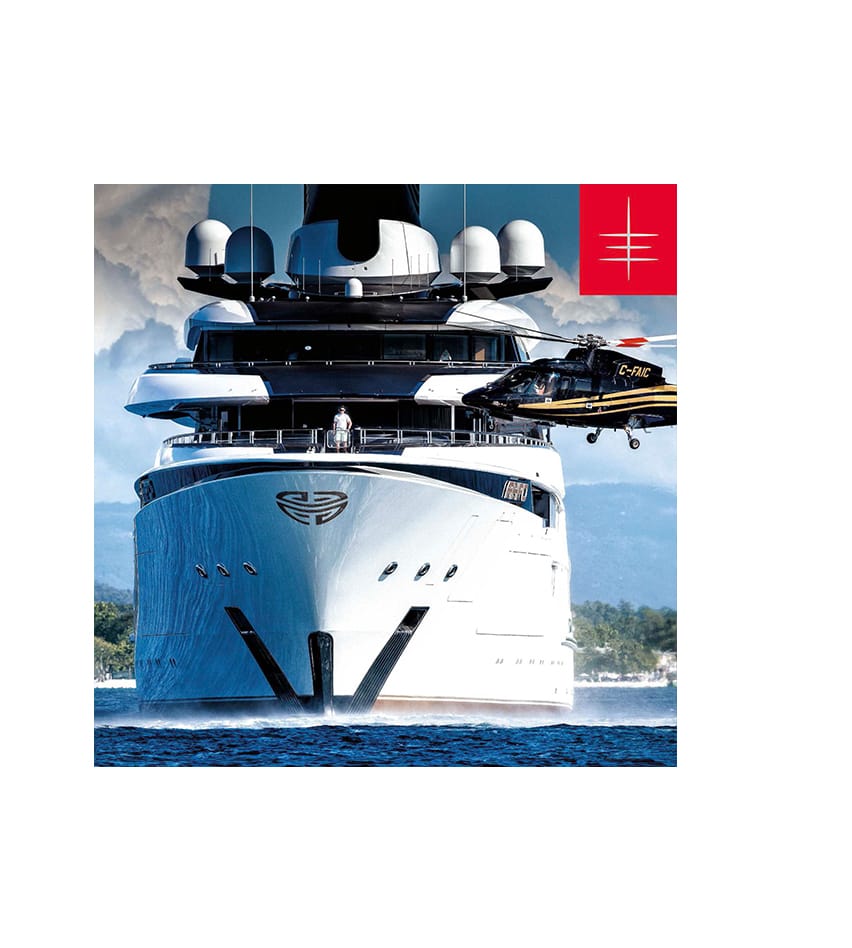
2025
Blending global cruising with lifestyle insight, the portfolio highlights larger yachts, evolving client expectations and the importance of access, expertise and personalised yacht experiences.
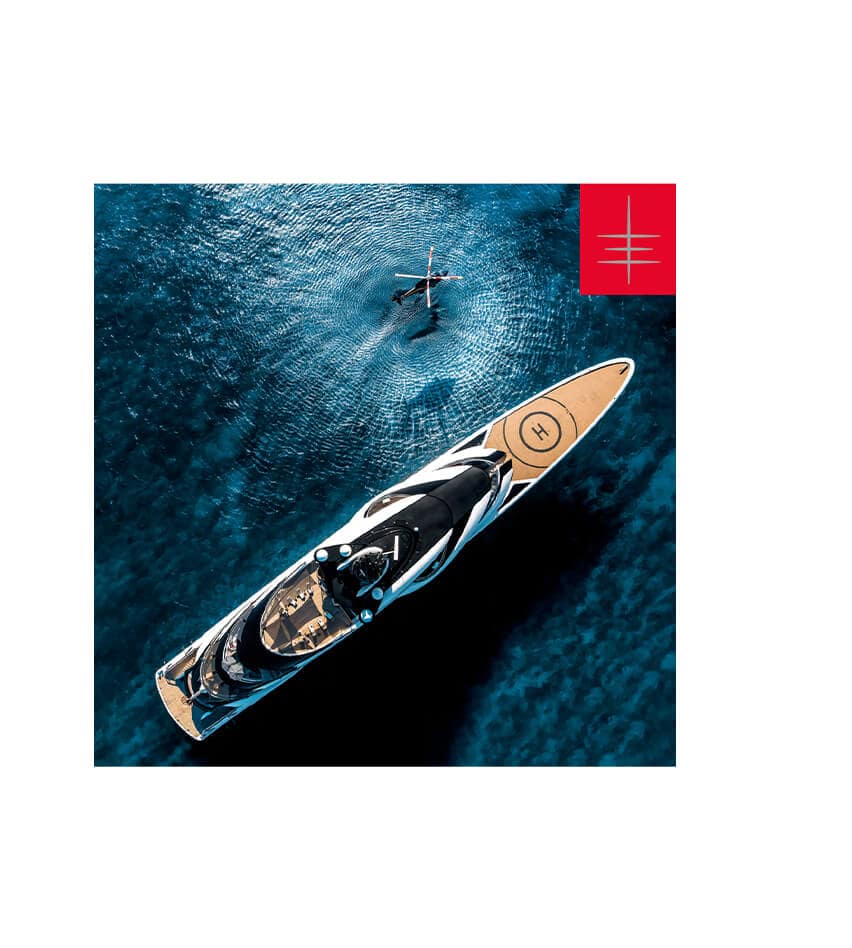
2024
Featuring Lady S yacht, the portfolio shifts to curated destination storytelling, combining Mediterranean lifestyle, dining and culture with insider knowledge on how to experience each location by yacht.
2023
A modern perspective on luxury yachting, blending global travel, curated experiences and a more lifestyle-driven approach to superyacht charter and ownership.
2022
Larger yachts and global activity define this edition, with strong sales and charter demand reinforcing the importance of scale, brokerage expertise and access to the best opportunities.
2021
Record demand reshapes the landscape, with limited availability and increased competition for charter yachts, as private travel and secure access to destinations become essential.
2020
A shift towards private use defines this edition, reinforcing yachts as controlled environments, offering flexibility, privacy and global mobility during changing travel conditions.
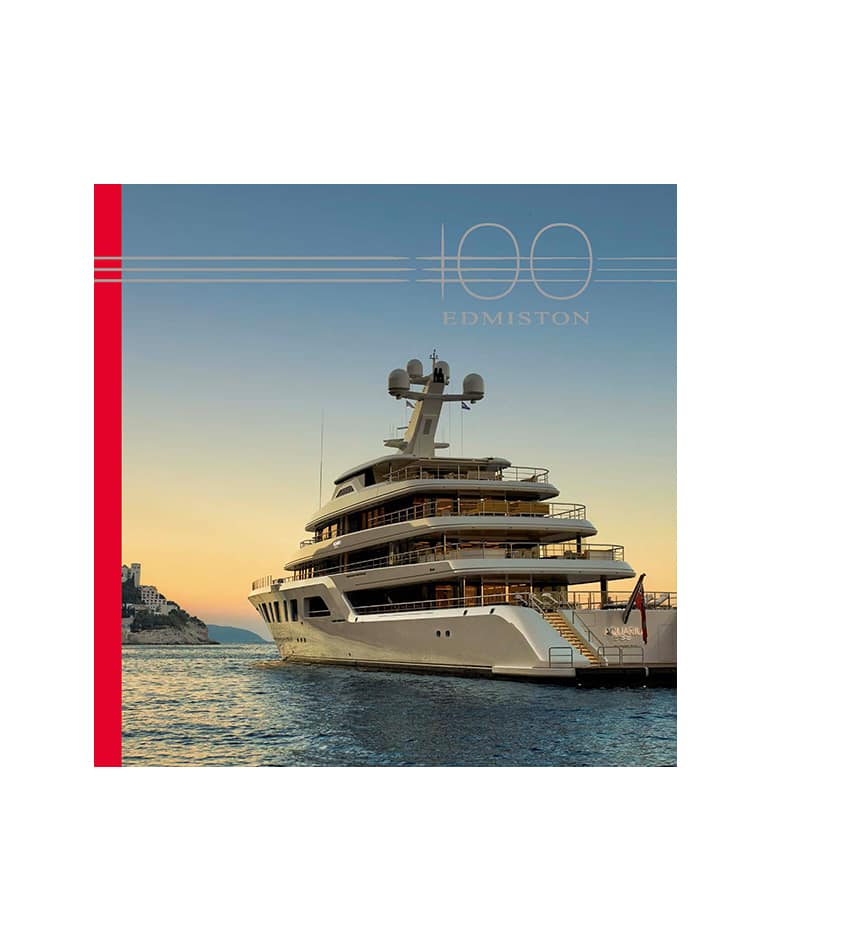
2019
Led by expedition yachts such as Legend, this edition highlights adventure-led cruising, with growing demand for remote destinations, submarines, helicopters and fully equipped discovery experiences.
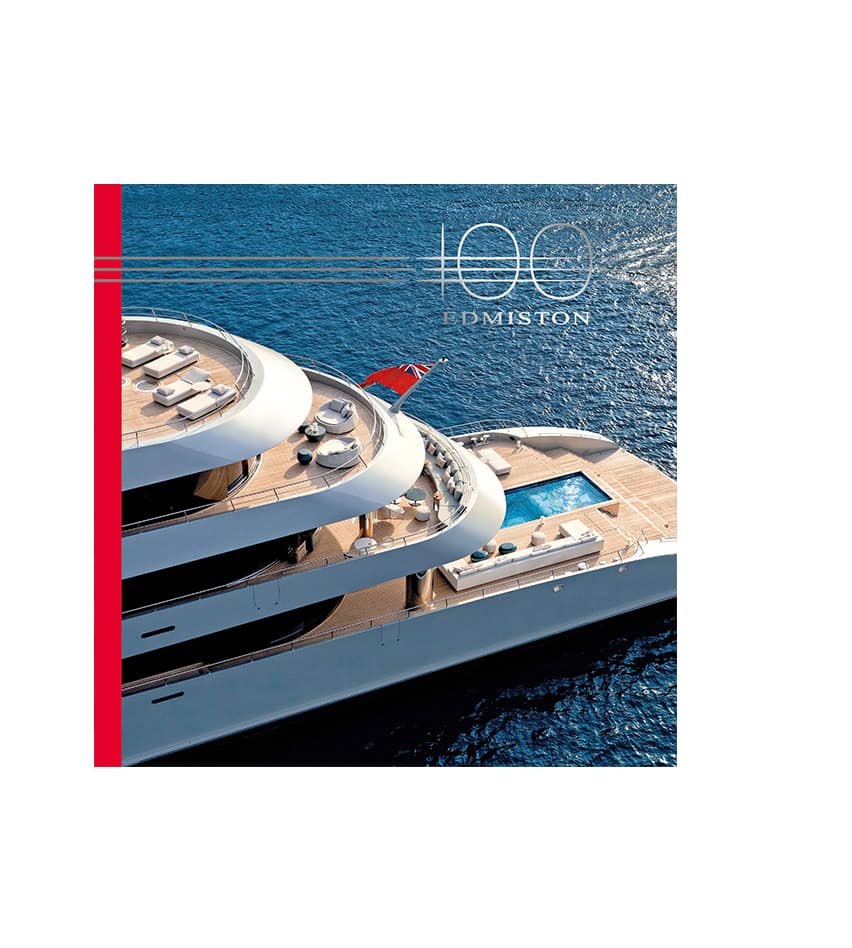
2018
A shift toward experience-led charter defines 2018, with global events such as the Monaco Grand Prix driving demand, alongside a shortage of large superyachts at the top end of the market.
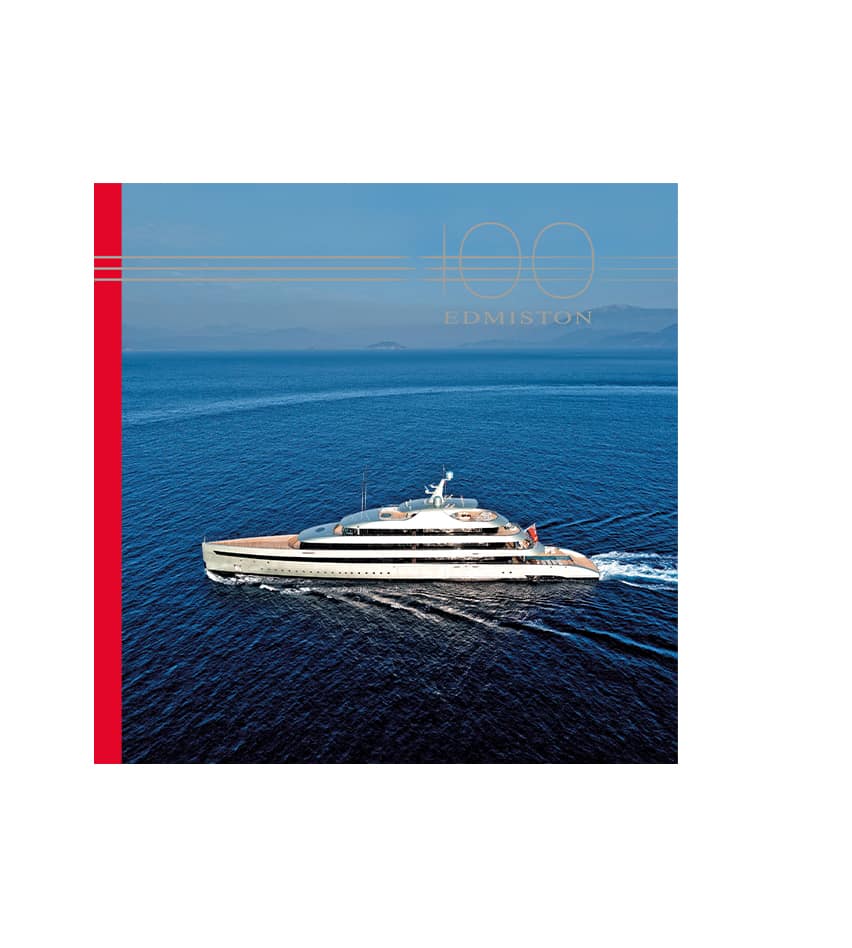
2017
Featuring Aquijo and Cloudbreak, the E100 introduces advanced discovery yachts, combining global exploration, onboard capability and growing emphasis on wellness, fitness and lifestyle experiences.
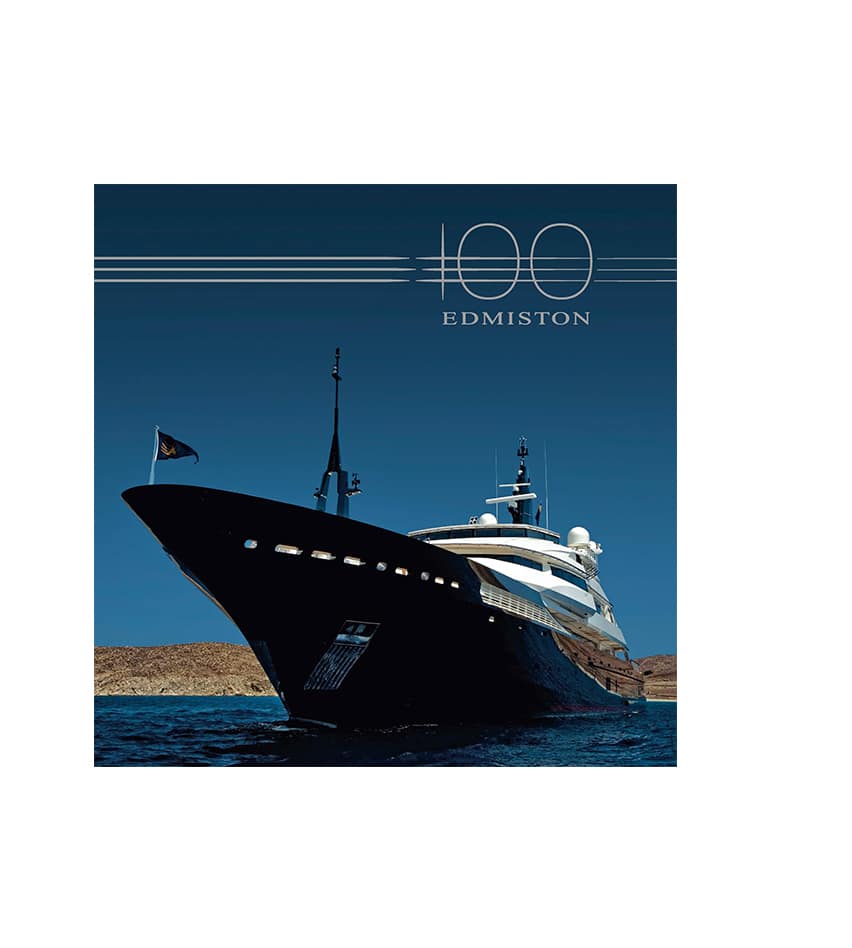
2016
Showcasing Savannah and sailing yacht A, this edition focuses on breakthrough design, efficiency and technology, highlighting rapid innovation in yacht construction, performance and scale.
2015
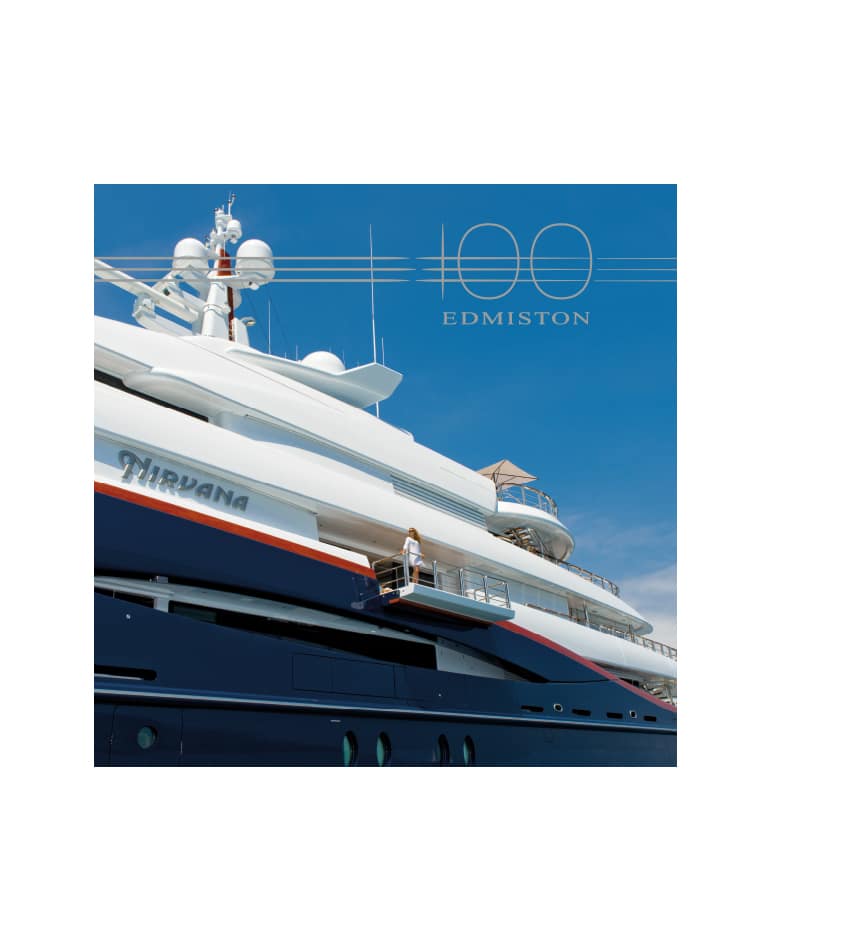
Featuring Nirvana alongside Serene, the E100 highlights elite charter yachts where quality, service and onboard experience outweigh size, reflecting demand for space, features and refined cruising.
2014
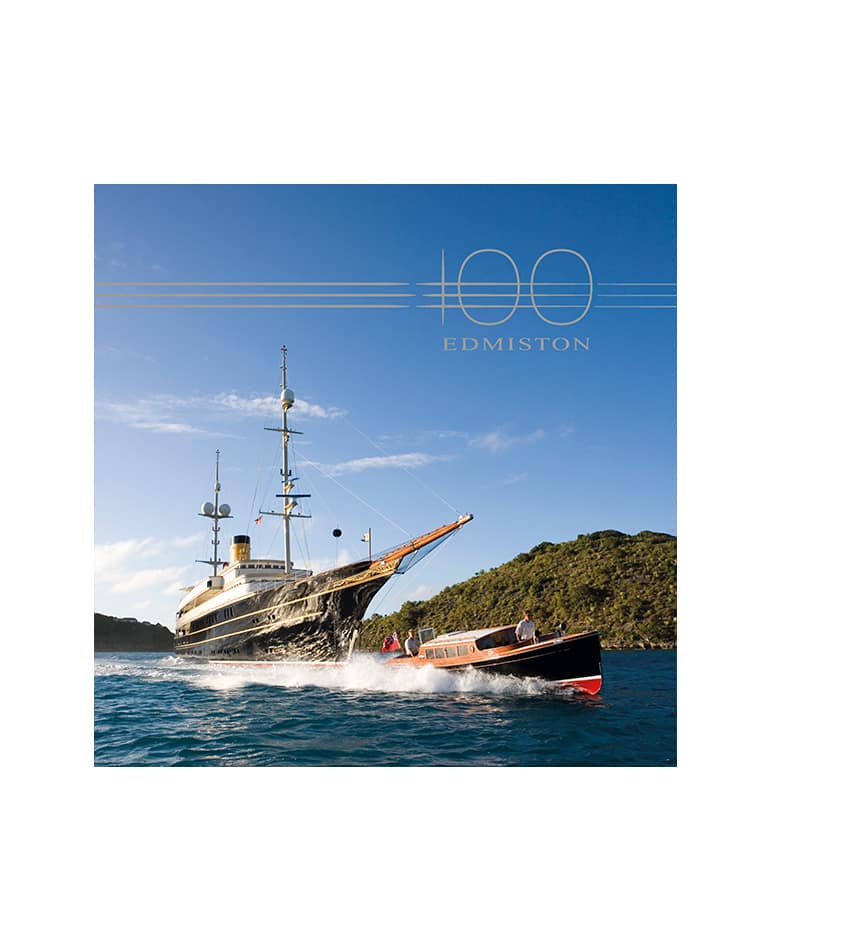
A definitive guide to the world’s finest superyachts for charter, highlighting design, service, and global cruising destinations with a strong emphasis on quality over size.

2013
Launching the E100, Edmiston curates the world’s finest charter yachts, defining an elite fleet based on quality, design and service across global cruising destinations.
Frequently asked QUESTIONS.
If you can’t find the answer for what you’re looking for here, our expert team are here to help.
How is demand for superyacht charters changing?
The demand for superyacht charters is strengthening across the fleet, and 2026 is shaping up to be a record season. Two of the most anticipated new deliveries – the 72 metre Silver Fox and the 87 metre Angelique – join the Mediterranean charter fleet this summer, and demand for the season remains high, with early planning essential to secure the best yachts. Growth is just as strong at the adventurous end of the market: enquiries for expedition and discovery-style itineraries have risen sharply, in step with a discovery yacht market that has grown by almost 50 per cent since 2024, and support-yacht demand by nearly 200 per cent.
What are the key trends in superyacht design and new builds?
The clearest key trend in superyacht design and new builds is sustainable propulsion moving from experimental to mainstream. Amels’ 80 metre Limited Edition Hull 5, due for delivery in 2027, is being built fossil-fuel free with advanced hybrid power, following Feadship’s 119 metre Breakthrough – the largest yacht ever built in the Netherlands and the first powered by hydrogen. Alongside this, owners are asking for wellness-led interiors, flexible deck spaces that convert between dining, cinema and gym, and vast sea-level beach clubs. The explorer and discovery-yacht sector is one of the fastest growing in the industry, and large sailing yachts are enjoying a genuine renaissance, from Perini Navi restorations to new performance-cruising ranges.
Is the superyacht market growing or slowing down?
The superyacht market is growing, not slowing down. 2025 was the industry’s best year on record: 363 yachts changed hands for a combined €7.14 billion, up from 316 yachts (€5.34 billion) in 2024 and 304 yachts (€5.78 billion) in 2023. Demand still comfortably outstrips supply for newer yachts over 50 metres, though price reductions rose 18 per cent year-on-year – a sign that owners are tempering expectations against a more discerning buyer base. In short: a bigger market, pricing itself with more discipline.
How much does a superyacht cost?
Superyacht purchase prices vary significantly by size, age and pedigree, but 2025 provides a useful benchmark: 363 yachts changed hands for a combined €7.14 billion, averaging just under €20 million each. At the very top end of the market, however, purchase prices can exceed €700 million for the largest and most exceptional yachts.
How quickly do superyachts sell?
Superyachts sell considerably faster with the right broker. Across the market, a yacht took an average of 578 days to sell in 2025. Edmiston-listed yachts sold in an average of 293 days – twice as fast as the market as a whole, a pattern that has held for three consecutive years.
Which superyacht sector is most in demand right now?
The most in-demand superyacht sector is the 80 metre-plus segment. In 2025, Edmiston sold 78 per cent of all 80 metre-plus yachts that changed hands and 60 per cent of every 100 metre-plus sale – the clearest evidence that demand, and value, are concentrated at the top of the market, even as smaller yachts (30–40m) remain the most active segment by volume.